
+
 WeChat:weixinhao

WeChat:weixinhao

ESOS Helpline 400-657-5166
You Are Here:Home > Information Dynamics
> Industry dynamics
News navigation
Recommended News
Recommended Products
What are the characteristics of a balanced forklift
source:www.szjllq.com | Release time:2025-10-11
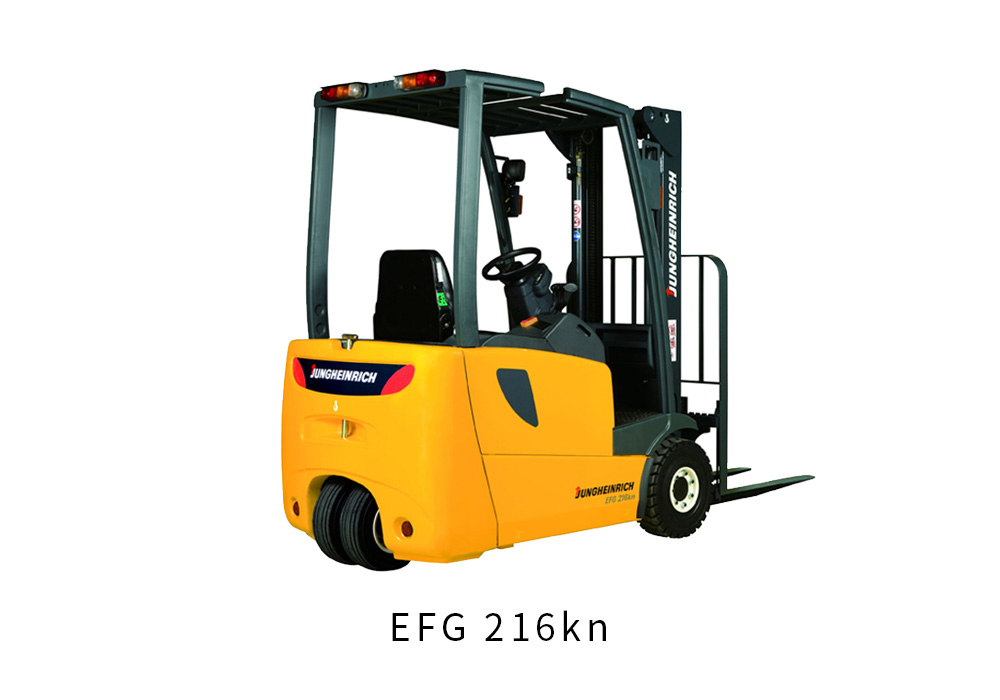
The balanced weight forklift is one of the most widely used types of forklifts in the industrial logistics field. Its core design features revolve around "stability, versatility, and operational efficiency". The front fork load is balanced by the balanced weight block at the rear of the vehicle, and safe operation can be achieved without relying on external support. The following is a detailed analysis of its main characteristics:
1、 Structural design: with "balance weight" as the core, balancing stability and flexibility
1. Balanced weight drive design (core feature)
The rear of the vehicle is equipped with a balance weight block made of cast iron or concrete material. Through the mechanical structure of "front load and rear weight", it offsets the overturning moment of the fork when it is loaded, without relying on shelves or track support like forward moving forklifts and stackers. It can operate independently in open spaces and is suitable for more flexible scenarios.
2. Rear wheel drive+front wheel steering
The mainstream models adopt a layout of "rear wheel drive, front wheel steering":
The driving wheels (rear wheels) provide strong power, suitable for climbing and starting with heavy loads;
The steering wheel (front wheel) has a large steering angle (some models can reach over 90 °), a small turning radius (especially for light vehicles under 3 tons), and can still make flexible U-turns in narrow warehouse passages (such as 3-4 meters wide).
3. Forks and door frames: customizable operating components
Fork length (mainly 1.2-2.4 meters) and gantry lifting height (standard 3-5 meters, high mounted models can reach 8-12 meters) can be selected according to needs, adapting to different pallet sizes (such as standard 1200 × 1000mm pallets) and shelf heights;
Some car models can be equipped with attachments such as side shifters, adjustable forks, and clamps, which can be extended to scenarios such as handling cardboard boxes, barrel shaped goods, and irregular parts.
2、 Performance characteristics: Strong overload capability, adaptable to complex working conditions
1. Wide load-bearing range and prominent advantages in heavy load
The rated lifting capacity covers 1-10 tons (mainstream 2-3.5 tons), and some heavy-duty vehicles can reach 20-50 tons (used for port and heavy industry handling), far exceeding forward moving forklifts (usually ≤ 3 tons) and electric stacker trucks (≤ 2 tons), suitable for "medium to large load, short distance transportation" scenarios (such as warehouse loading and unloading, workshop batching).
2. High homework efficiency and low operational threshold
Fast driving speed (internal combustion type unloaded speed can reach 20-25km/h, electric type about 12-15km/h), suitable for cross regional handling;
The operation interface is simple (steering wheel+joystick+pedals), and beginners can get started with it after short-term training without the need for complex skills.
3、 Applicable scenarios: Strong universality, covering multiple industries
The structure and performance of a balanced forklift determine its "full field adaptation" characteristics, making it the most widely used type of forklift currently, with core scenarios including:
Warehouse logistics: loading and unloading of pallets in the warehouse, replenishment of shelves (middle and low level shelves, ≤ 5 meters), and cross warehouse transportation;
Manufacturing industry: handling of raw materials/semi-finished products in the workshop (such as parts transportation in automobile factories, casting transportation in machinery factories), production line batching;
Commercial retail: loading and unloading of goods in supermarkets/e-commerce logistics centers (such as container unloading and truck loading);
Outdoor operations: Short distance container transportation at port terminals, handling of construction materials (steel bars, cement pallets) at construction sites, loading and unloading of farm feed/agricultural products.
4、 Advantages and disadvantages: Significant advantages, but limitations should also be noted
1. Core advantages
High stability: with a balanced weight design and wide wheelbase, it is not easy to overturn under heavy loads and has a higher safety factor than forklifts without counterweights;
Strong universality: It can adapt to the vast majority of pallet types, and can handle non pallet goods without the need for specialized equipment after adding accessories;
High cost-effectiveness: With mature technology and large production capacity, the procurement cost (especially for 2-3 ton electric/internal combustion models) is lower than that of dedicated forklifts such as forward moving and stacker trucks, and there are many maintenance outlets, making maintenance convenient in the later stage.
2. Main limitations
Large space occupation: Compared to forward moving forklifts, balance weight forklifts have longer body length (including balance weight) and larger turning radius (about 2.8-3.5 meters for 3-ton models), making them unsuitable for ultra narrow passages (≤ 2.5 meters) or height limited scenarios (such as low warehouses);
Heavy duty models have poor flexibility: Internal combustion balance weight forklifts weighing over 5 tons have heavy bodies and inflexible steering, making them only suitable for outdoor open field operations;
The range of electric vehicle models relies on charging: Lead acid battery models have a single range of about 4-6 hours and require a charging station or backup battery, which cannot be "instantly recharged" like internal combustion vehicles.
1、 Structural design: with "balance weight" as the core, balancing stability and flexibility
1. Balanced weight drive design (core feature)
The rear of the vehicle is equipped with a balance weight block made of cast iron or concrete material. Through the mechanical structure of "front load and rear weight", it offsets the overturning moment of the fork when it is loaded, without relying on shelves or track support like forward moving forklifts and stackers. It can operate independently in open spaces and is suitable for more flexible scenarios.
2. Rear wheel drive+front wheel steering
The mainstream models adopt a layout of "rear wheel drive, front wheel steering":
The driving wheels (rear wheels) provide strong power, suitable for climbing and starting with heavy loads;
The steering wheel (front wheel) has a large steering angle (some models can reach over 90 °), a small turning radius (especially for light vehicles under 3 tons), and can still make flexible U-turns in narrow warehouse passages (such as 3-4 meters wide).
3. Forks and door frames: customizable operating components
Fork length (mainly 1.2-2.4 meters) and gantry lifting height (standard 3-5 meters, high mounted models can reach 8-12 meters) can be selected according to needs, adapting to different pallet sizes (such as standard 1200 × 1000mm pallets) and shelf heights;
Some car models can be equipped with attachments such as side shifters, adjustable forks, and clamps, which can be extended to scenarios such as handling cardboard boxes, barrel shaped goods, and irregular parts.
2、 Performance characteristics: Strong overload capability, adaptable to complex working conditions
1. Wide load-bearing range and prominent advantages in heavy load
The rated lifting capacity covers 1-10 tons (mainstream 2-3.5 tons), and some heavy-duty vehicles can reach 20-50 tons (used for port and heavy industry handling), far exceeding forward moving forklifts (usually ≤ 3 tons) and electric stacker trucks (≤ 2 tons), suitable for "medium to large load, short distance transportation" scenarios (such as warehouse loading and unloading, workshop batching).
2. High homework efficiency and low operational threshold
Fast driving speed (internal combustion type unloaded speed can reach 20-25km/h, electric type about 12-15km/h), suitable for cross regional handling;
The operation interface is simple (steering wheel+joystick+pedals), and beginners can get started with it after short-term training without the need for complex skills.
3、 Applicable scenarios: Strong universality, covering multiple industries
The structure and performance of a balanced forklift determine its "full field adaptation" characteristics, making it the most widely used type of forklift currently, with core scenarios including:
Warehouse logistics: loading and unloading of pallets in the warehouse, replenishment of shelves (middle and low level shelves, ≤ 5 meters), and cross warehouse transportation;
Manufacturing industry: handling of raw materials/semi-finished products in the workshop (such as parts transportation in automobile factories, casting transportation in machinery factories), production line batching;
Commercial retail: loading and unloading of goods in supermarkets/e-commerce logistics centers (such as container unloading and truck loading);
Outdoor operations: Short distance container transportation at port terminals, handling of construction materials (steel bars, cement pallets) at construction sites, loading and unloading of farm feed/agricultural products.
4、 Advantages and disadvantages: Significant advantages, but limitations should also be noted
1. Core advantages
High stability: with a balanced weight design and wide wheelbase, it is not easy to overturn under heavy loads and has a higher safety factor than forklifts without counterweights;
Strong universality: It can adapt to the vast majority of pallet types, and can handle non pallet goods without the need for specialized equipment after adding accessories;
High cost-effectiveness: With mature technology and large production capacity, the procurement cost (especially for 2-3 ton electric/internal combustion models) is lower than that of dedicated forklifts such as forward moving and stacker trucks, and there are many maintenance outlets, making maintenance convenient in the later stage.
2. Main limitations
Large space occupation: Compared to forward moving forklifts, balance weight forklifts have longer body length (including balance weight) and larger turning radius (about 2.8-3.5 meters for 3-ton models), making them unsuitable for ultra narrow passages (≤ 2.5 meters) or height limited scenarios (such as low warehouses);
Heavy duty models have poor flexibility: Internal combustion balance weight forklifts weighing over 5 tons have heavy bodies and inflexible steering, making them only suitable for outdoor open field operations;
The range of electric vehicle models relies on charging: Lead acid battery models have a single range of about 4-6 hours and require a charging station or backup battery, which cannot be "instantly recharged" like internal combustion vehicles.
【Related articles】
【Related Products】
Shanghai Shriku Group Co., Ltd
Address: No. 888 Dongda Road, Pudong New Area, Shanghai
Shanghai Xiaofeng Supply Chain Management Co., Ltd
Address: 22nd Floor, Building B, Greenland Jiezuo, Kunshan City (100 meters south of Greenland Avenue)
Jiangsu Baojuying Plastic Industry Technology Co., Ltd
Address: No. 1188 Xinzhou Road, Wujiang District, Suzhou City
Contact phone number: 13918185781
-

Follow WeChat
Copyright © 2024 Shanghai Xuansu Industrial Co., Ltd 
Shanghai Xiaofeng Supply Chain Management Co., Ltd Jiangsu Baojuying Plastic Industry Technology Co., Ltd
Technical Support:Lange
 home
home
 WeChat
 telephone